Coastal industry
Desalinated water for industrial utilities, process make-up water, cooling-water make-up and plant service water.
Core product · seawater desalination
MIT Water supplies seawater reverse osmosis systems for coastal, marine, remote-site and industrial desalination projects. SWRO is one of the core WTP businesses of MIT Water.
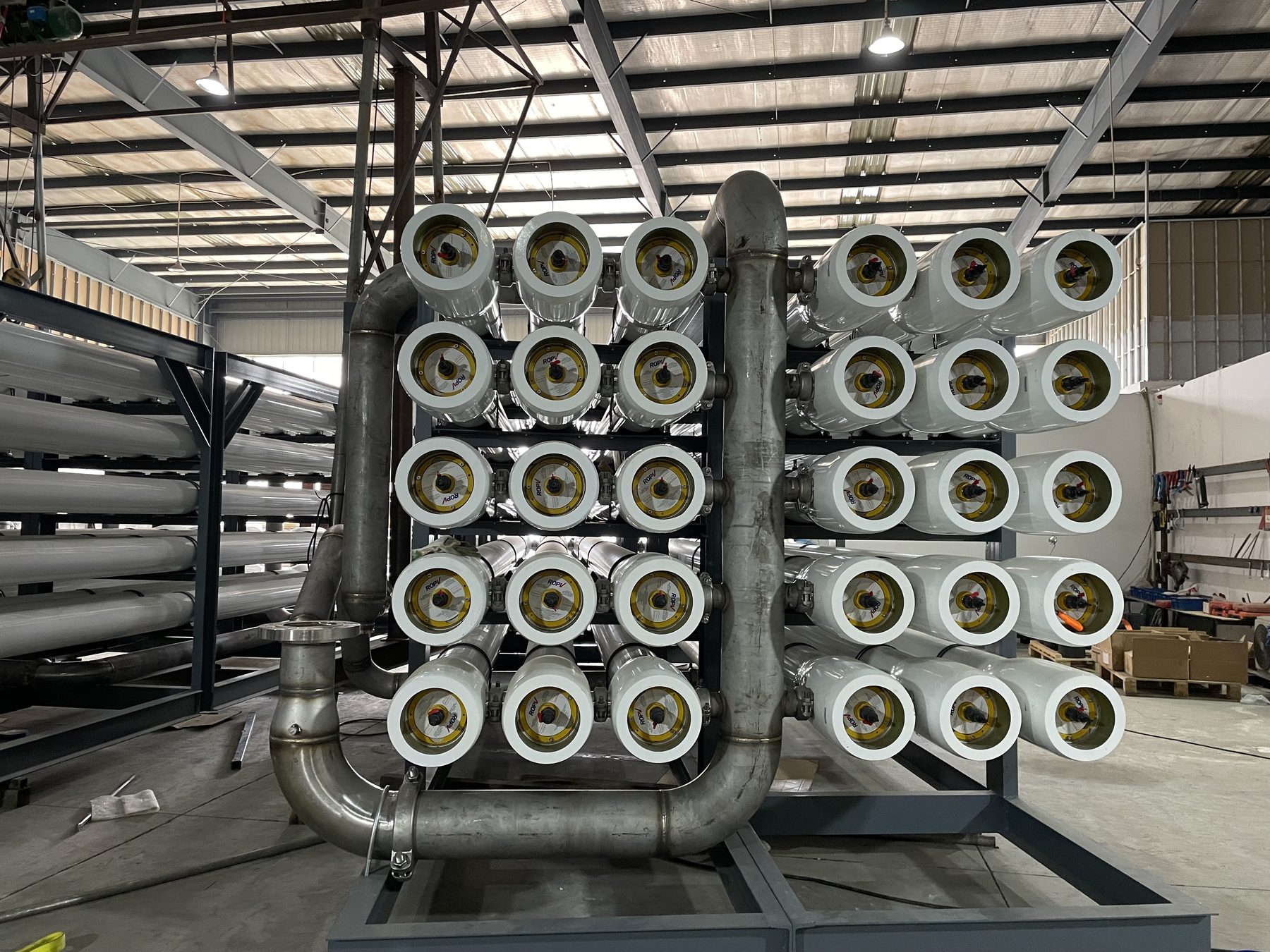 Photo: before pickling & passivation
SWRO configuration
SWRO design starts from seawater TDS, intake method, turbidity, SDI, fouling risk, temperature, recovery target, permeate quality, energy consumption and material selection.
Applications
SWRO is selected when the feed water is seawater or high-salinity brine and the project needs stable desalinated water for utility, process, potable or polishing use.
Desalinated water for industrial utilities, process make-up water, cooling-water make-up and plant service water.
Compact SWRO equipment for sites where municipal water is unavailable or unstable and seawater is the practical source.
SWRO permeate can be followed by BWRO, EDI, UV, remineralization or other polishing based on final water quality.
Technical review
For a meaningful SWRO proposal, MIT Water usually reviews the seawater analysis, required permeate quality, daily capacity, operating hours, intake condition, available power supply and project location.
TDS, chloride, sulfate, calcium, magnesium, silica, boron, turbidity, SDI and temperature affect process selection.
For seawater service, material choice for piping, pumps, valves and instruments must consider corrosion and operating pressure.
Recovery, cleaning frequency, chemical consumption, flushing and standby mode are reviewed before final configuration.