Screen / Bar Screen
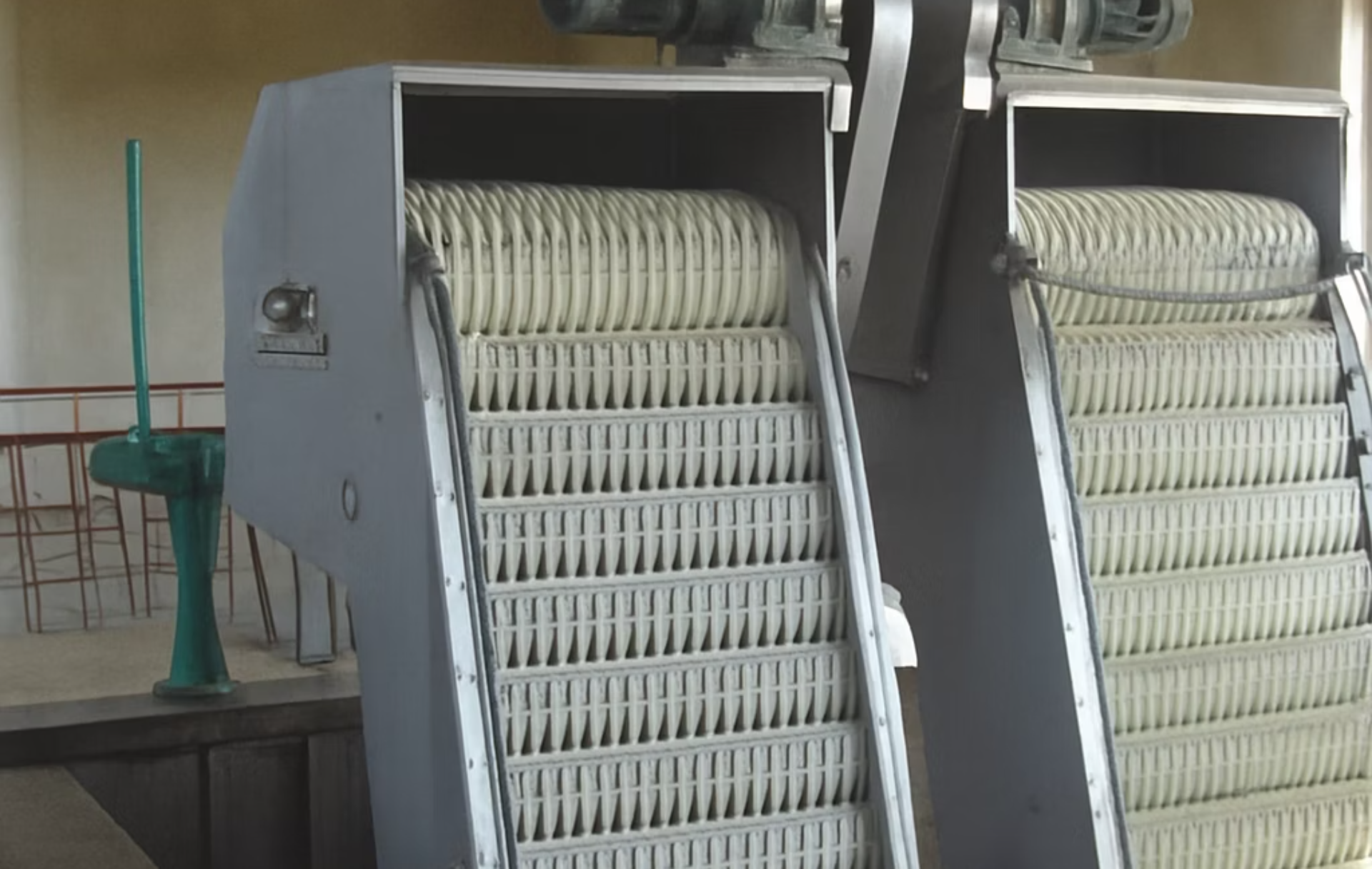
Mit Water supplies mechanical screens and bar screens for preliminary treatment of raw water and wastewater. These screens are the first stage of protection for downstream treatment equipment, removing large solids, debris, rags, plastics and other coarse materials that could damage pumps, clog pipes or interfere with subsequent treatment processes.
Working Principle
Influent flows through a screen with defined bar spacing, typically ranging from 3 mm to 50 mm. Solids larger than the gap are retained on the screen surface while screened water passes through. The retained material is periodically removed by a mechanical raking mechanism that lifts the screenings to a discharge point. Automatic operation is controlled by timer or differential water level sensors.
System Features
Our screens are available in various configurations including coarse bar screens, fine screens, step screens and rotary drum screens. The screen frame is constructed from SS304 or SS316L for corrosion resistance. The raking mechanism is driven by an electric motor with overload protection. Control panels include PLC-based automation with remote monitoring capability.
Mechanical screens are applied across water and wastewater treatment:
- Municipal wastewater treatment plant headworks
- Industrial wastewater pre-treatment for food, textile, paper and chemical plants
- Surface water intake protection for drinking water treatment plants
- Cooling water intake screening for power plants
- Storm water overflow screening
- Slaughterhouse and food processing wastewater screening
Technical Parameters
| Bar Spacing | 3 to 50 mm |
| Channel Width | 400 to 3,000 mm |
| Flow Rate | Up to 10,000 m3/h per unit |
| Frame Material | SS304 or SS316L |
| Screen Type | Coarse bar, fine, step, or rotary drum |
| Cleaning Mechanism | Motor-driven mechanical rake |
| Control | PLC with timer or level differential actuation |
| Installation | Open channel or enclosed pipe |