Pre-treatment - ACF
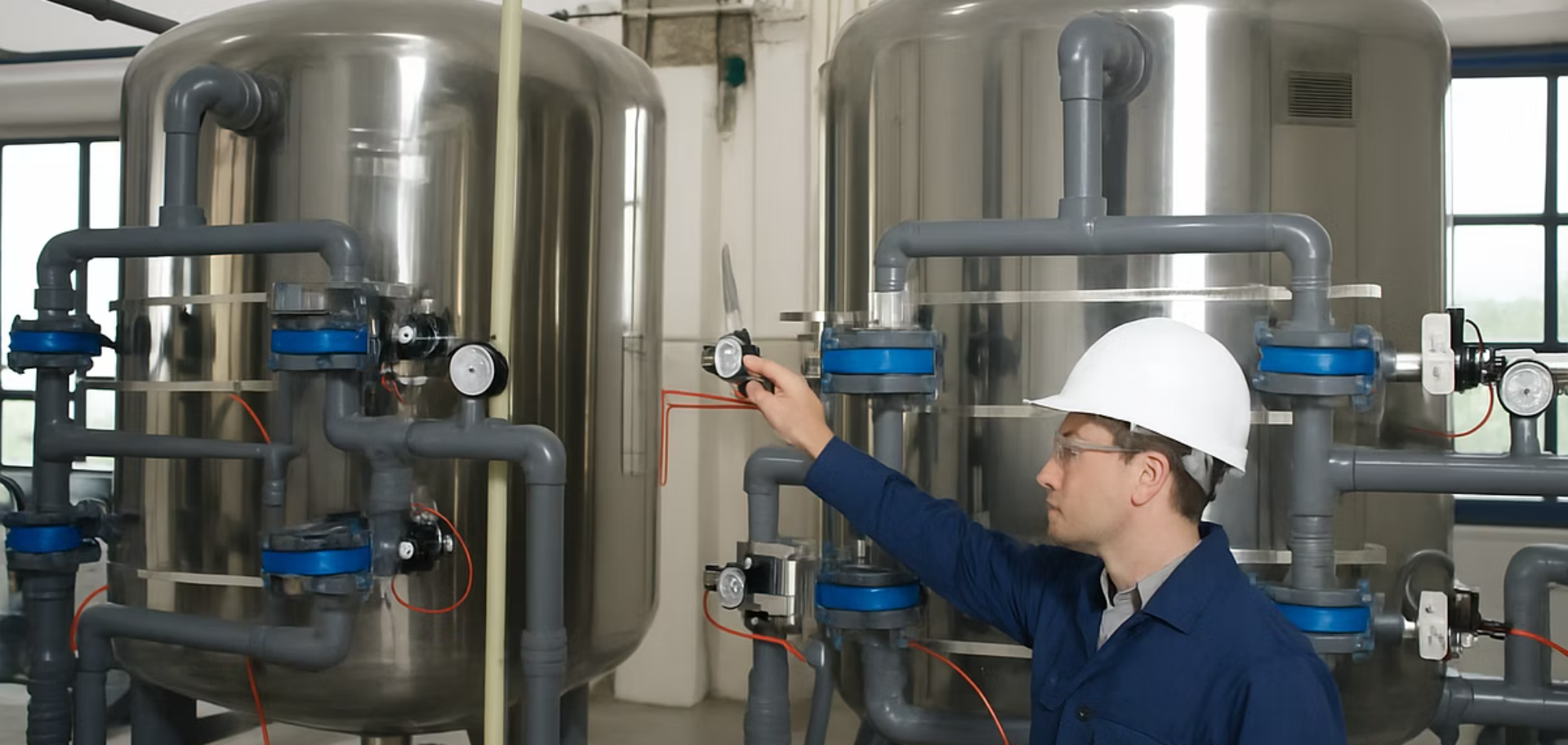
Mit Water supplies activated carbon filtration (ACF) systems for pre-treatment of water prior to downstream membrane or ion exchange processes. Activated carbon removes free chlorine, organic compounds, taste and odour-causing substances, and certain micropollutants that could foul or degrade downstream treatment equipment.
Working Principle
Water passes through a bed of granular activated carbon (GAC) contained in a pressure vessel. Organic compounds are removed through physical adsorption onto the extensive internal surface area of the activated carbon (typically 800-1,200 m2 per gram). Free chlorine is removed through a chemical reaction where the carbon surface catalyses chlorine reduction to chloride ions.
System Features
Our ACF systems include FRP or carbon steel pressure vessels, graded support media, granular activated carbon, automatic backwash valves, and a PLC control panel. Systems are available with single or multiple vessels. Empty bed contact time (EBCT) is designed based on the target contaminants.
Activated carbon filtration is essential pre-treatment for many water treatment processes:
- Free chlorine removal before RO and NF membranes
- Organic matter reduction before ion exchange demineralizers
- Taste and odour control in drinking water treatment
- Micropollutant and pesticide removal from surface water
- Colour removal from industrial process water
- Pre-treatment for pharmaceutical purified water systems
- Groundwater remediation (BTEX, chlorinated solvents)
Technical Parameters
| Flow Rate | 0.5 to 100 m3/h per vessel |
| Media Type | Granular activated carbon (coal, coconut, or wood based) |
| EBCT | 5 to 30 minutes (application dependent) |
| Filtration Velocity | 5 to 15 m/h |
| Vessel Material | FRP or epoxy-lined carbon steel |
| Chlorine Removal | 2 to 4 kg Cl2 per 100 kg GAC |
| Iodine Number | 900 to 1,100 mg/g |
| Backwash Rate | 25 to 35 m/h, bed expansion 30-50% |