Odour Control System
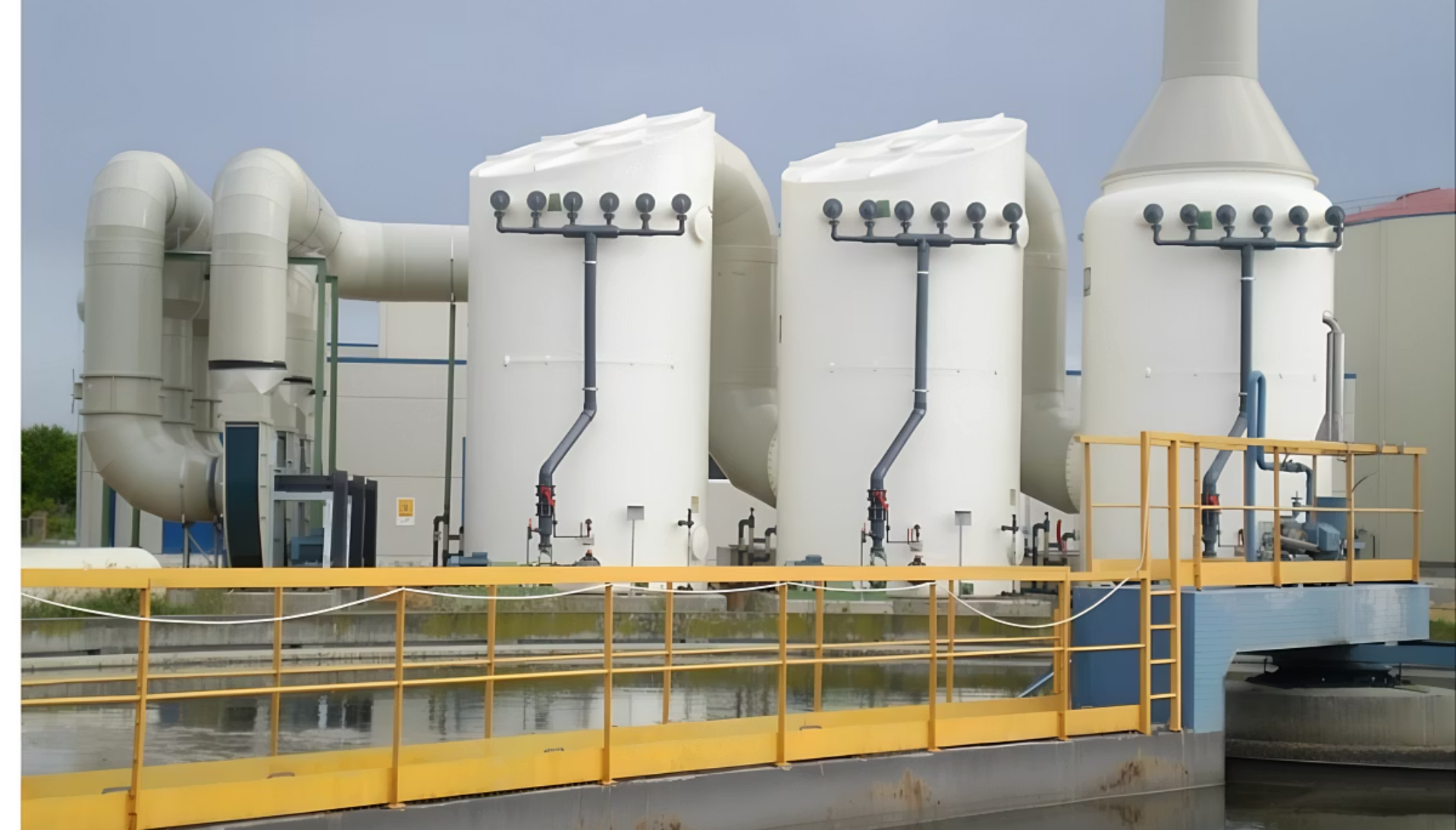
Mit Water supplies odour control systems for capture and treatment of malodorous emissions from wastewater treatment plants, pumping stations, sludge handling facilities and industrial processes. Effective odour control is essential for regulatory compliance and maintaining good community relations.
Working Principle
Odorous air is collected from covered process units through a ductwork system and directed to the treatment unit. Depending on the odour composition and concentration, treatment technologies include chemical scrubbing, biological treatment or activated carbon adsorption. Chemical scrubbers use acid, caustic or oxidant solutions to absorb H2S, NH3 and organic sulphur compounds. Biofilters pass odorous air through a packed bed of organic media where microorganisms oxidise odour compounds.
System Components
A complete odour control system includes collection hoods and covers, FRP or SS ductwork, extraction fans, the treatment unit (scrubber, biofilter or carbon adsorber), exhaust stack, and a PLC control panel. Multi-stage configurations combining different technologies are available for complex odour profiles.
Odour control systems are essential across various facilities:
- Municipal wastewater treatment plant odour control
- Sludge thickening, dewatering and drying facilities
- Pumping stations and sewer overflow structures
- Food and beverage processing plant odour emissions
- Rendering and animal by-product processing
- Chemical and petrochemical plant VOC control
- Composting and organic waste treatment facilities
Technical Parameters
| Air Flow Rate | 500 to 100,000 m3/h per unit |
| H2S Removal | 95% to 99.9% |
| Technologies | Chemical scrubber, biofilter, activated carbon |
| Scrubbing Media | NaOH, H2SO4, NaOCl, H2O2 (chemical scrubber) |
| Biofilter Media | Wood chips, compost, lava rock, or synthetic media |
| Empty Bed Residence Time | 20 to 60 seconds (biofilter/carbon) |
| Ductwork Material | FRP, PP, or SS316L |
| Control System | PLC with H2S and pressure monitoring |